
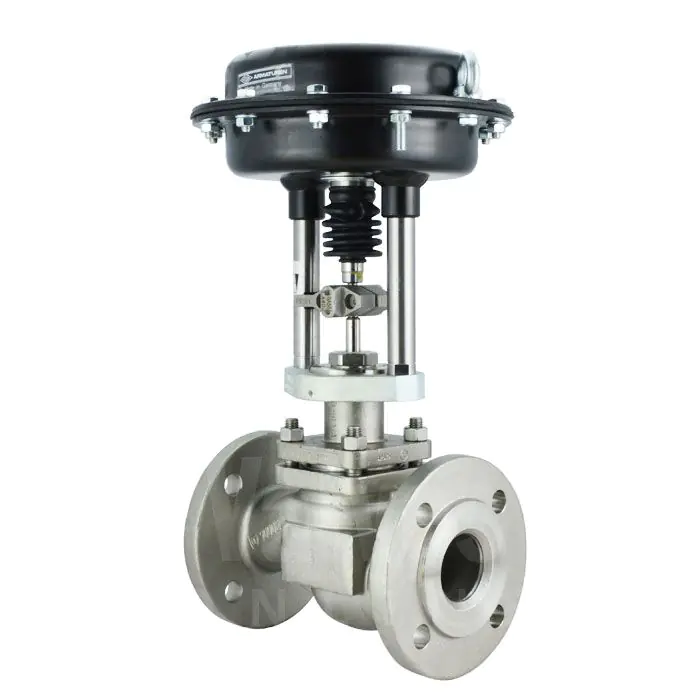
Control valves are essential components in modern automation systems. These valves regulate the flow of liquids, gases, or steam within a system, ensuring that the right amount of fluid passes through at the right time. This regulation is crucial for maintaining the desired levels of pressure, temperature, and flow rate in various industrial processes. As industries increasingly adopt automation to enhance productivity and consistency, control valves serve as a critical interface between digital signals and physical systems.
What Control Valves Do in Automation
Control valves play a central role in maintaining performance standards in automated processes. They receive signals from control systems and adjust the opening or closing of the valve to modify flow. This action helps stabilize process variables and improves product quality.
Accurate Flow Control
Vincer control valves manage the exact amount of fluid or gas flowing through pipelines, which is essential for process accuracy.
- Ensures proper mixing of materials
- Maintains chemical ratios
- Prevents overflow or underflow
Temperature Regulation
By controlling the flow of heating or cooling agents, control valves help in maintaining optimal temperature conditions and control valve should always be in what position.
- Supports energy-efficient operations
- Prevents overheating or freezing
- Maintains process consistency
Pressure Stability
These valves help manage pressure fluctuations by adjusting flow resistance, which stabilizes system performance.
- Avoids equipment damage
- Enhances safety
- Ensures uninterrupted operation
Automation Integration
Modern control valves are equipped with actuators and smart sensors. This allows them to communicate with distributed control systems DCS and programmable logic controllers PLCs.
- Supports real-time adjustments
- Enables predictive maintenance
- Enhances remote monitoring
Improved Efficiency and Reduced Downtime
By optimizing the process parameters, control valves contribute to operational efficiency.
- Reduces manual intervention
- Cuts down energy use
- Lowers maintenance frequency
Industries That Benefit from Control Valves
Control valves are used across various sectors that rely on automated processes:
- Oil and Gas – Managing pipeline pressure and flow
- Chemical Manufacturing – Ensuring accurate dosing and mixing
- Pharmaceuticals – Maintaining sterile and precise production conditions
- Food and Beverage – Controlling temperature and ingredient flow
- Power Generation – Regulating steam and cooling systems
Control valves are fundamental to modern automation systems. Their ability to adjust flow, pressure, and temperature enhances the reliability and efficiency of industrial processes. With features that support digital communication and real-time control, these valves serve as key enablers of process optimization and stability. As industries continue to automate operations, the role of control valves in ensuring performance and safety will only grow stronger.